
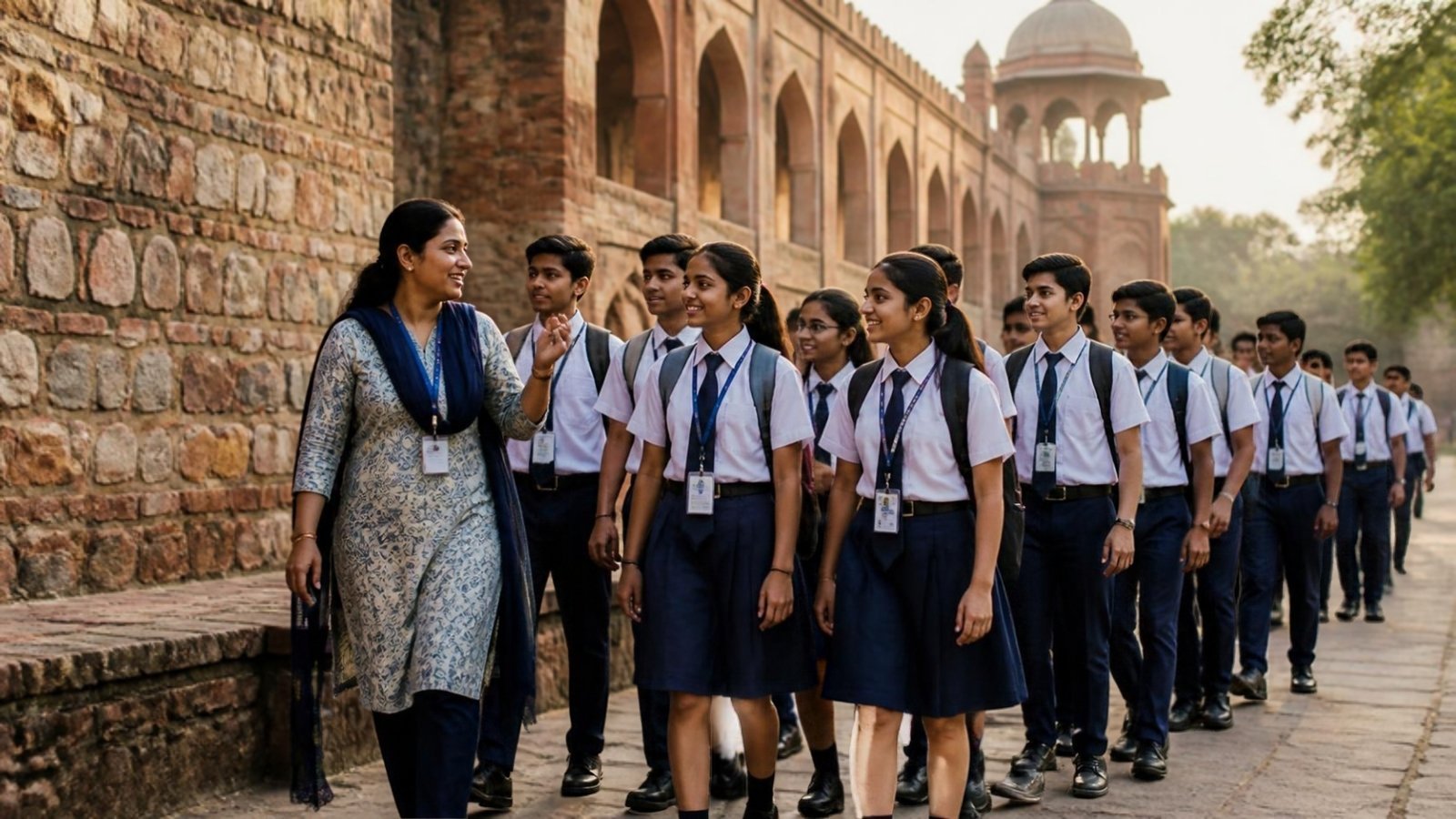
Quick answer: A safe school trip in India needs written approval from the head of the institution, signed parental consent and medical forms, a supervision ratio of about 1 adult to 10-15 students, group insurance, verified transport and stays, and a destination matched to the curriculum.
Short answer: A safe educational school trip in India starts with clear learning objectives and approval from the head of the institution, followed by written parental consent and medical forms for every student, as set out in CBSE’s 2014 safety guidelines for study tours. Plan for roughly one adult for every 10 to 15 students (more for younger children or adventure activities), buy group travel and personal accident insurance, and use licensed transport, verified stays and a trained escort team. Popular destinations include Rishikesh, Rajasthan, Delhi and Agra, Meghalaya, Hampi and the Himalayan foothills.
Quick facts
| Item | Details |
|---|---|
| Best months | October to February for most of India; April to June for Himalayan hill destinations |
| Climate | Varies by region; avoid peak summer in the plains and monsoon in hilly and coastal areas |
| Duration | 1-day field visits to 5 to 7 day residential tours |
| Difficulty | Easy for heritage and science tours; easy to moderate for outdoor and adventure camps |
| Approvals | Head of institution sanction, parental consent, medical forms, board or state rules where applicable |
| Supervision | About 1 adult per 10 to 15 students as common practice; female staff for girl students |
| Insurance | Group travel and personal accident cover for all students and staff |
| Typical budget | About Rs 2,000 to Rs 4,500 per student per day for domestic multi-day tours (indicative) |
Why plan an educational school trip?
Field trips turn classroom topics into lived experience. A history lesson on the Mughals becomes clearer in Agra and Fatehpur Sikri, ecology makes sense in a Meghalaya forest, and teamwork develops on a camp in the Himalayan foothills. The National Education Policy 2020 places strong emphasis on experiential learning, and well-designed trips are one of the most direct ways to deliver it.
What approvals are needed for a school trip in India?
Requirements vary by board and state, but a typical approval chain looks like this:
- Head of institution approval: The principal approves the purpose, itinerary, budget and staff list. CBSE’s circular on standard safety measures for study tours (Acad-40/2014) places responsibility on the head of the institution to ensure the tour benefits students and that the school will support students in an emergency.
- Management or trust sign-off for overnight or out-of-state trips, where school policy requires it.
- Parental consent: Signed consent from a parent or guardian for every student, with emergency contact numbers.
- Medical declaration: Allergies, chronic conditions, regular medication and dietary needs for each student.
- State or district rules: Some state education departments require intimation or permission for tours, particularly overnight trips. Check your state’s latest circulars.
What teacher-to-student ratio should a school trip have?
There is no single national ratio for all Indian schools. As common practice, plan for at least 1 adult per 10 to 15 students for middle and senior school, and closer to 1 per 8 to 10 for primary classes or for adventure activities such as rafting, trekking or water sports. Always send at least two adults even with small groups.
Include female teachers or staff whenever girl students travel, and assign each adult a fixed group of students for headcounts. The operator’s trip leader, instructors and medic are in addition to, not a replacement for, school staff.
What insurance does a student tour need?
At minimum, buy group travel insurance that covers medical emergencies and hospitalisation, personal accident cover and emergency evacuation for every student and staff member. For adventure activities, confirm that the policy does not exclude them. Ask the tour operator about their own public liability cover, and keep a printed copy of policy numbers and the insurer’s helpline with each teacher.
How do you make a school trip safe?
Transport
Use vehicles with valid commercial permits, fitness certificates, insurance and speed governors where required, with experienced drivers holding valid licences. Avoid night driving on hill roads. For train travel, book berths together and assign teachers to each coach.
Accommodation
Choose stays with separate floors or wings for boys and girls, teachers’ rooms beside students, working fire safety equipment and 24-hour staff. Visit or get a recent video walkthrough before confirming.
Activities
Adventure activities must be run by licensed operators with certified instructors, proper safety gear and age-appropriate limits. Match activities to the youngest student’s ability.
Health and communication
Carry a first-aid kit, students’ medicines, a list of nearby hospitals and a medical contact. Share a daily update with parents and agree on one emergency communication channel.
Which destinations work best for school trips in India?
- Rishikesh and Uttarakhand foothills: Camping, river ecology, yoga and supervised rafting for older students.
- Delhi, Agra and Jaipur: Mughal and Rajput history, Parliament and museums, and astronomy at Jantar Mantar.
- Meghalaya: Living root bridges, caves, rainfall geography and community-led conservation.
- Hampi and Karnataka: Vijayanagara history and architecture.
- Himachal Pradesh: Mountain ecology, apple orchards and adventure camps for senior classes.
- Gujarat and Maharashtra: Freedom movement history, science centres and coastal ecosystems.
How much does a school educational tour cost?
As an indicative range, domestic multi-day tours cost about Rs 2,000 to Rs 4,500 per student per day, including stay, meals, local transport, entry fees, activities and escort. Train or flight costs to the destination are extra. Costs rise with smaller groups, air travel, premium stays and specialist activities. Ask operators for an inclusion list and a separate line for insurance and GST.
Practical tips
- Start planning 3 to 4 months ahead, and 6 months for peak October to December dates.
- Hold a parents’ meeting to explain the itinerary, rules, packing list and emergency plan.
- Give every student an ID card with the school name, teacher contact and hotel address.
- Do headcounts at every boarding, meal and activity, using a buddy system.
- Set a clear policy on phones, money and food outside the group plan.
- Collect pre-trip and post-trip learning tasks so the tour links back to the curriculum.
Carabiner Diaries plans and runs educational tours and outdoor learning camps for schools across India, built around curriculum goals and student safety. To discuss a tour for your school, send us an enquiry at carabinerdiaries.com.
Frequently asked questions
What permission is required for a school trip in India?
Schools need approval from the head of the institution, signed parental consent and a medical declaration for each student. Some state education departments and school managements also require prior intimation or approval for overnight or out-of-state tours.
What is the ideal teacher-student ratio for school trips?
There is no single national ratio. As common practice, schools use about 1 adult per 10 to 15 students for older classes and about 1 per 8 to 10 for younger children or adventure activities, with at least two adults and female staff for girl students.
Does CBSE have guidelines for school tours?
Yes. CBSE issued a circular on standard safety measures for organising study tours in 2014 (Acad-40/2014). It covers responsibilities of the head of the institution, parental permission and student safety during tours.
Is insurance mandatory for school trips?
It is strongly recommended and many schools require it. Buy group travel and personal accident cover for all students and staff, and check that adventure activities are included.
What are good educational trip destinations in India?
Popular options include Delhi, Agra and Jaipur for history, Rishikesh for outdoor learning, Meghalaya for ecology and culture, Hampi for architecture, and Himachal Pradesh for mountain studies and adventure camps.
How far in advance should a school trip be planned?
Plan at least 3 to 4 months ahead to secure approvals, train or flight bookings and accommodation. For October to December, start 6 months ahead.