
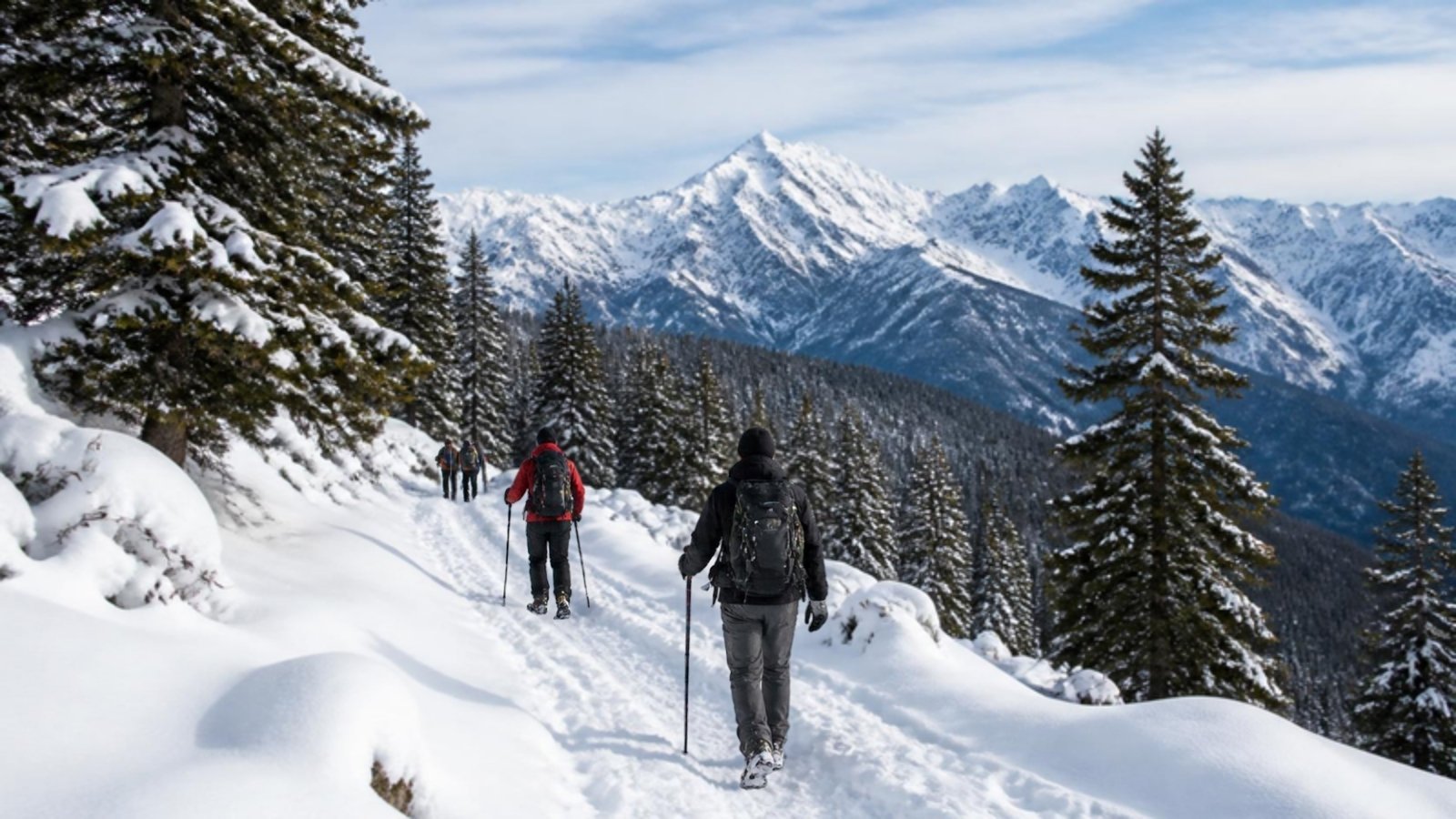
Quick answer: Kedarkantha is an easy-to-moderate 5 to 6 day winter trek in Uttarakhand that tops out at about 3,800 m (12,500 ft). The best snow is from mid-December to March, and most group packages from Dehradun cost roughly Rs 7,000 to Rs 15,000 per person.
Short answer: Kedarkantha is a 5 to 6 day trek in the Govind Pashu Vihar area of Uttarkashi district, Uttarakhand, with a summit of about 3,800 m (12,500 ft). It is rated easy to moderate, starts from Sankri village (about 200 to 210 km from Dehradun) and is best done from December to April, with the deepest snow between mid-December and March. A typical group package from Dehradun costs about Rs 7,000 to Rs 15,000 per person.
Quick facts
| Item | Details |
|---|---|
| Best months | December to April for snow; mid-December to March for the deepest snow |
| Summit altitude | About 3,800 m (12,500 ft) |
| Base village | Sankri, about 1,950 m (6,400 ft) |
| Trek distance | Roughly 20 km on foot over 4 trekking days |
| Duration | 5 to 6 days from Dehradun, including two long drive days |
| Difficulty | Easy to moderate; summit day is steep and long |
| Winter temperatures | Daytime about 5 to 10 degrees C; nights 0 to minus 10 degrees C at camp |
| Nearest airport / rail | Jolly Grant Airport, Dehradun / Dehradun railway station |
| Permits | Forest entry permit for Govind Pashu Vihar, arranged through a registered local guide or operator |
| Typical budget | Rs 7,000 to Rs 15,000 per person for a group package from Dehradun (indicative) |
Where is Kedarkantha and why is it so popular?
Kedarkantha sits in the Govind Pashu Vihar National Park and Sanctuary in Uttarkashi district, Uttarakhand. The trek begins at Sankri, a village in the Tons valley that serves as the base for several treks in the region.
It is popular because it is one of the few Himalayan summit treks that beginners can attempt in deep winter. The route passes through pine and oak forests, a frozen lake at Juda ka Talab and open snow slopes, and the summit offers a wide view of peaks such as Swargarohini, Bandarpoonch and Black Peak.
What is the best time to do the Kedarkantha trek?
The trek is open for most of the year outside the monsoon, but it is best known as a winter trek. December to April is the main season. Snowfall is usually heaviest from mid-December to March, and January typically sees the most snow on the trail.
March and April bring longer days, slightly warmer nights and melting snow on the lower slopes. Autumn (October and November) offers clear skies and little snow. Avoid July and August, when monsoon rain makes the trail slippery and roads to Sankri prone to landslides.
What is the Kedarkantha trek route?
The standard itinerary is a loop or out-and-back from Sankri. Exact campsites vary slightly by operator.
- Day 1: Drive Dehradun to Sankri, about 200 to 210 km and 8 to 10 hours via Mussoorie, Purola and Mori.
- Day 2: Trek Sankri to Juda ka Talab, about 4 km and 3 to 4 hours. The lake at roughly 2,800 m often freezes in winter.
- Day 3: Trek Juda ka Talab to Kedarkantha base camp, about 4 km and 3 to 4 hours, to roughly 3,400 m.
- Day 4: Summit day. Start before dawn, climb to the 3,800 m summit, then descend to the base camp or onward to Hargaon or Juda ka Talab. This is the longest day, often 8 to 10 hours.
- Day 5: Descend to Sankri.
- Day 6: Drive back to Dehradun.
How difficult is Kedarkantha?
Kedarkantha is rated easy to moderate. Daily walking distances are short and the gradient up to base camp is gentle. The challenge is summit day, which involves a steep climb in snow at altitude, early-morning cold and a long descent.
A first-time trekker with reasonable fitness can complete it. As a benchmark, aim to jog 4 to 5 km without stopping and climb several flights of stairs with a loaded backpack before the trek. Children above about 10 to 12 years and fit older adults regularly do this trek with an experienced team.
How much does the Kedarkantha trek cost?
Most organised group departures from Dehradun cost about Rs 7,000 to Rs 15,000 per person. The price usually includes shared transport from Dehradun, homestay or guesthouse in Sankri, tents, meals on the trek, a trek leader, guides and permits. Check whether GST, the forest permit, offloading of your backpack and travel insurance are included.
Add your own travel to Dehradun, gear rental (microspikes, gaiters, jacket, trekking pole) if you do not own it, and personal expenses. A small group or private trip will cost more per person.
Do you need a permit for Kedarkantha?
Yes. Because the trek is inside the Govind Pashu Vihar protected area, trekkers need a forest entry permit. It is normally arranged through a guide registered with the forest department or through your trek operator at the Sankri forest office. Carry a government photo ID such as Aadhaar, passport or driving licence.
Is Kedarkantha safe in winter?
It is considered one of the safer winter treks when done with a competent team, but it still involves real risks. Icy sections, especially verglas on shaded parts of the trail, need microspikes and trekking poles. Temperatures at camp can drop to minus 10 degrees C, and altitude sickness is possible above 3,000 m. Teams should carry a first-aid kit, a pulse oximeter and a clear turnaround time for summit day.
Practical tips
- Book flights or trains to Dehradun with a buffer so you reach in time for the early-morning drive to Sankri.
- Layer up: thermal base layer, fleece, down or synthetic jacket and a windproof shell work better than one heavy coat.
- Wear waterproof trekking shoes with good grip and carry microspikes and gaiters from December to March.
- Drink 3 to 4 litres of water a day and walk at a steady pace to reduce the risk of altitude sickness.
- Mobile network is weak beyond Sankri; inform family before you start and keep cash for Sankri.
- Carry back all your waste; the forest department and local communities are strict about littering in the sanctuary.
Carabiner Diaries runs Kedarkantha departures through the winter season for individuals, friends’ groups and schools. If you would like help choosing dates or preparing for your first snow trek, send us an enquiry at carabinerdiaries.com.
Frequently asked questions
How high is Kedarkantha peak?
The Kedarkantha summit is about 3,800 m, or roughly 12,500 ft, above sea level. The trek starts at Sankri, which is about 1,950 m.
Is Kedarkantha good for beginners?
Yes. Kedarkantha is one of the most recommended first Himalayan treks because daily distances are short and the gradient is gentle up to base camp. Summit day is steep and long, so basic fitness preparation is needed.
Which month has the most snow on Kedarkantha?
Snow is usually deepest from mid-December to March, and January generally receives the most snowfall. Conditions vary every year, so check recent trail reports before you go.
How many days does the Kedarkantha trek take?
Most itineraries take 5 to 6 days from Dehradun to Dehradun, which includes about 4 trekking days and 2 long drive days between Dehradun and Sankri.
How do I reach Sankri?
Fly or take a train to Dehradun, then drive about 200 to 210 km, roughly 8 to 10 hours, via Mussoorie, Purola and Mori. Most trek operators run shared pickups from Dehradun early in the morning.
Can I do Kedarkantha without a guide?
Permits for the Govind Pashu Vihar area are generally issued through registered local guides, and winter conditions make navigation and safety harder. Trekking with a registered guide or an organised group is strongly advised.